

Northgard Battlegrounds Beginner Guide: How a Run Works
Northgard Battlegrounds hands you a shop, a hex board and a clan, then lets the fights play out without you. Every decision happens between battles. Here are the rules of a run and the first four rounds, where most early losses come from.
Ten wins before five lives
A run ends one of two ways: you win 10 PvP battles, or you lose 5 lives first. The rival settlements you fight are boards other players built and saved, so nobody is watching your board and answering it. You can't scout one opponent and counter them; you build something that holds against whatever comes next.
You never control a fight. Units march out of their camps and the battle plays itself, and you don't have to knock down an enemy's towers to win, only beat the units they send. Everything you decide happens before the fight: what you buy, where it goes and what you save. After each battle every structure shows the damage and kills it added, and that screen is the quickest way to see which piece is pulling its weight.
Seasons and the creature round
Rounds run in seasons of four: Spring, Summer, Autumn and Winter. The first battle of every season is against Northgard's creatures instead of a player. It gives no victory and costs no life, but each kill pays Krowns, so an army that can't finish the creatures leaves money behind.
Spring's creature is a single level 2 Fox, which almost any opening beats. Summer is the round to plan for: a level 2 Jötunn Camp and two level 2 Kobold Camps, which means one Jötunn and six Kobolds. A Spring board that is all economy and no damage gets found out there. Winter brings level 3 Draugr Tombs, a Wyvern Nest and two Gates of Helheim, as strong as a good player board.
A new season also lets you raise one clan skill or your Banner Hall, and the shop starts showing rarer structures.
| Season | Creature board in the first round |
|---|---|
| Spring | Fox (level 2) |
| Summer | Jötunn Camp (level 2), 2 Kobold Camps (level 2), 2 Mines |
| Autumn | 2 Bears (level 3), 2 Foxes (level 3), Boar (level 2) |
| Winter | 2 Draugr Tombs, Gjallarhorn, Wyvern Nest (all level 3), 2 Gates of Helheim, Skull of Hrungnir (level 2) |
Krowns, Lore and villagers
Krowns buy structures and villagers. Lore buys Fate cards. Your Banner Hall pays both at the start of each round, 11 Krowns and 4 Lore at level 1 and 15 and 6 at level 3, and other structures add to that. A Common structure costs 4 Krowns, an Uncommon 8, a Rare 12, an Epic 18 and a Legendary 24.
Villagers do two jobs. Sent out, they colonise a new tile, which is the only way your board grows: every structure has to sit on an empty tile you have colonised. Put into a camp, they become soldiers. Warrior, Shield Bearer, Axe Thrower and Tracker Camps each send one unit per villager, up to three, so a camp with one villager is a third of a camp.
The first villager costs 4 Krowns and each one after it costs 3 more, and the shop sells one per round. Early villagers are cheap; late ones are not.
Stag or Raven
The demo opened with Stag and Raven, and the choice changes what your economy is for. Wolf joined in the 2026-10-19 update; the clans page covers all three. Raven fights with Liv: 200 Health, 8 Damage, 15 Crit Chance, and after every battle she grows by 50 Health, 5 Damage and 3 Crit Chance. Her skills pay off from Economy structures (Refined Weaponry, Duelist's Cunning) and from colonising tiles (Rangers), so on Raven a Mine or a Farm is also a weapon. Raven's own structures, Mercenary Camp and Naglfar, both grow with the Krowns you keep in the bank. Raven starts with 1 favor with Odin.
Stag fights with Brand: 240 Health, 10 Damage, 40 Armor and a slower swing, growing by 50 Health, 5 Damage and 10 Armor per battle. His skills reward level 3 structures (Inspiring Architecture, Valorous Leader) and free rerolls (Extra Supplies), so Stag likes a few pieces pushed to level 3 over a wide board. Stag gets Hall of Skalds, a healer camp that also makes Lore, and Hlidskjalf, the only structure that sends Einherjar. Stag starts with 1 favor with Baldr.
Neither is the easy pick. Take Stag if you like hunting copies to finish level 3 pieces; take Raven if you like income that doubles as damage.
Your first Spring: damage first
The Spring shop is 85% Common and 15% Uncommon, and since patch 0.77.111d it never shows a Rare. Your build's centrepiece won't turn up yet, so Spring is about two things: winning fights now and buying income that keeps paying.
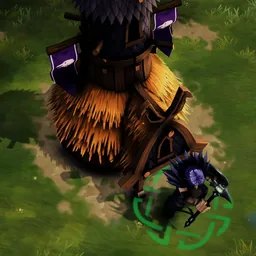
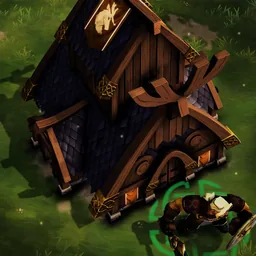
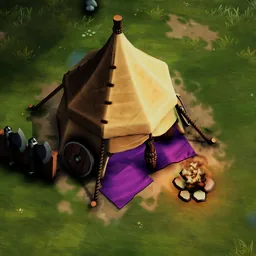
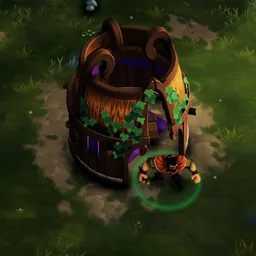
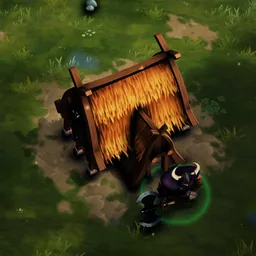
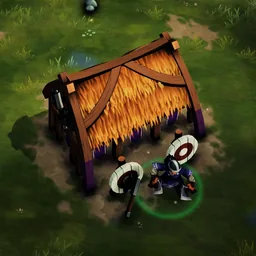
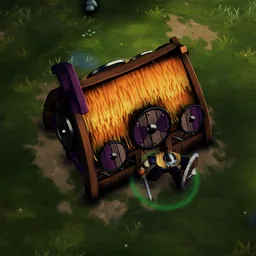
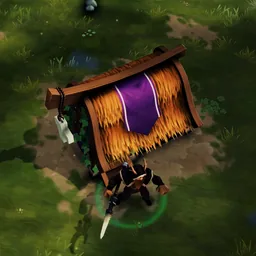
Buy a fighting camp first. A board with no damage loses the early rounds, and each lost round is one of your five lives gone. A Warrior, Axe Thrower, Shield Bearer or Tracker Camp with villagers in it is the usual start. Add a Healer's Hut early as well: winning fights without healers is hard unless you later build a huge Bifrost army.
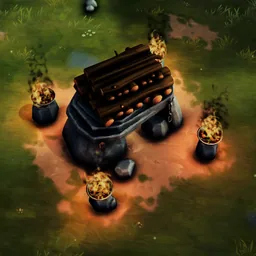
An early Burn source helps too. A Spring board with no Burn tends to lose to boards that have it, and a Ceremonial Bonfire beside your camps gives each neighbouring unit 1 Burn at level 1, or 3 on a Wildlands tile.
Income that keeps paying
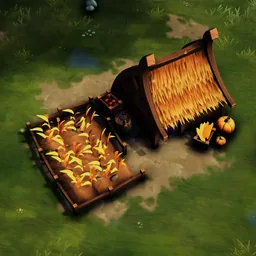
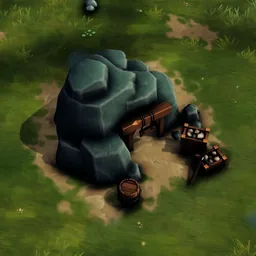
A Farm bought in Spring hands its Health to the units beside it in every fight that follows; bought in Autumn, it has only a handful of fights left to matter. A House on a Fertile tile gives you a free villager every round, worth more the longer you hold it. A Mine pays only on a Rocky tile, so look at the tile before you buy.
What not to do: reroll the shop when you can't afford what the new shop would show. The first reroll costs 2 Krowns, the next 4, then 8, and the price keeps doubling up to 64. In Spring that money is better spent on a villager.
A sound opening board
The game's own tutorial rivals show a sound shape to copy. The first Raven one fields an Axe Thrower Camp with two villagers, a Mine and a Watch Tower. The first Stag one has a Shield Bearer Camp with two villagers, a Hall of Skalds, a Mine and a Marketplace. That is one camp that fights, one healer or support piece, and one or two pieces that pay.
A few rounds later the Stag rival has two Shield Bearer Camps at level 2, a Healer's Hut at level 2, the Mine at level 2, the Hall of Skalds, a Farm and the Marketplace. Nothing on that board is rare. Its strength is levelled camps full of villagers with healers standing behind them.
Levelling and selling
Buying another copy of a structure you own combines the two and raises its level, up to level 3, and the units it sends grow with it. Levelling what you already have usually beats adding more level 1 pieces, even rarer ones: a level 3 Warrior, Axe Thrower or Shield Bearer has three times the Health and Damage of a level 1 one, and the camp already has its villagers.
Selling a structure returns some of its Krowns and every villager inside it, so a Spring piece you've outgrown is never a dead loss. Sell the House once every camp has the villagers it needs, and give its tile to something that fights.
Before Summer
By the last Spring round you want camps with villagers in them, a healer, an income piece or two and a free tile for what Summer brings. From there, the builds page shows where each archetype is heading, and the other guides cover the shop, placement and Fate cards in detail. Don't fill every tile in Spring: the rarer pieces you are building towards need somewhere to go.
BuildsEconomy and shop guidePlacement guideFate cards and gods guide